Dmitri Fontaine thought he needed a book redesign. Within one conversation, it was clear he had a brand problem.
The Real Problem
Dmitri was already a recognized authority in the PostgreSQL world. He was a Major Contributor to the open source project, a sought-after speaker at international conferences, and the author of a self-published technical book that had sold well on its first edition, built entirely on the strength of his reputation. No publisher behind him, no marketing team, no brand infrastructure. Just a developer who knew his subject deeply enough that the community found him anyway.
What he didn’t have was coherence.
Nothing visually connected the person on stage to the book on their desk to the website they’d relied on for years. His site—tapoueh.org, one of the oldest PostgreSQL resources on the internet—drew significant traffic, but visitors had no way of knowing it belonged to the same person who wrote the book or gave the keynote. He was everywhere in his community and invisible at the same time.
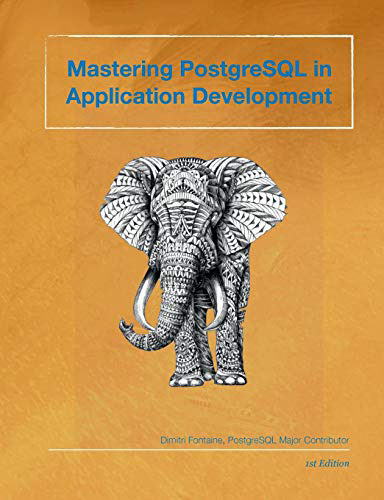
The original edition is technically accurate yet visually indistinguishable from any other technical book.
He came to me wanting to redesign his existing book, “Mastering PostgreSQL in Application Development,” for a second edition. He also had longer-term ambitions: a subscription community, online tutorials, a content platform. But none of that could work without first answering a more fundamental question: who is Dimitri Fontaine to the community who already relied on him, and how do they know it?
The Creative Decision That Changed Everything
Before we touched a single design element, we talked about naming.
The original title, “Mastering PostgreSQL in Application Development,” was perfectly functional title, technically accurate, descriptive, and completely indistinguishable from dozens of other technical books on the shelf. It said nothing about Dmitri’s particular approach to the subject, which was less about mastering a tool and more about developing a genuine fluency with data, the way a craftsman thinks about their material, not just operates it.
We landed on “The Art of PostgreSQL,” four words instead of six, and a provocation instead of a description. The word “art” in a world of engineers carries historical weight neither of us took lightly. Donald Knuth’s “The Art of Computer Programming,” first published in 1968, is widely considered the definitive bible of the field, and the book Bill Gates said you should send him your résumé if you can read in full.
By invoking that tradition, Dmitri wasn’t renaming a book: he was staking a claim about the seriousness of his subject and his standing within it. That title became the brand, not just for the book, but for everything that followed. The rename didn’t just clarify the book—it unified a career.
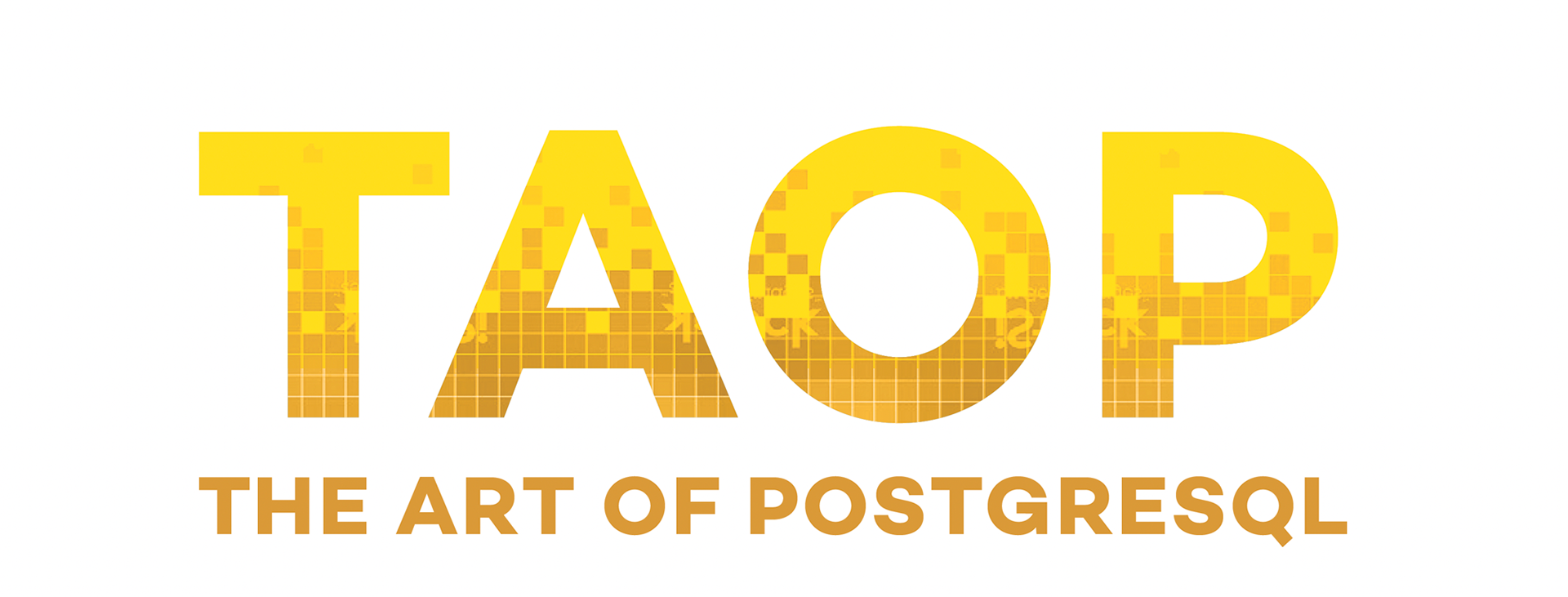
Early identity exploration: initial logo concept and naming development.
The Work
With the brand established, we extended it across every surface Dmitri occupied.
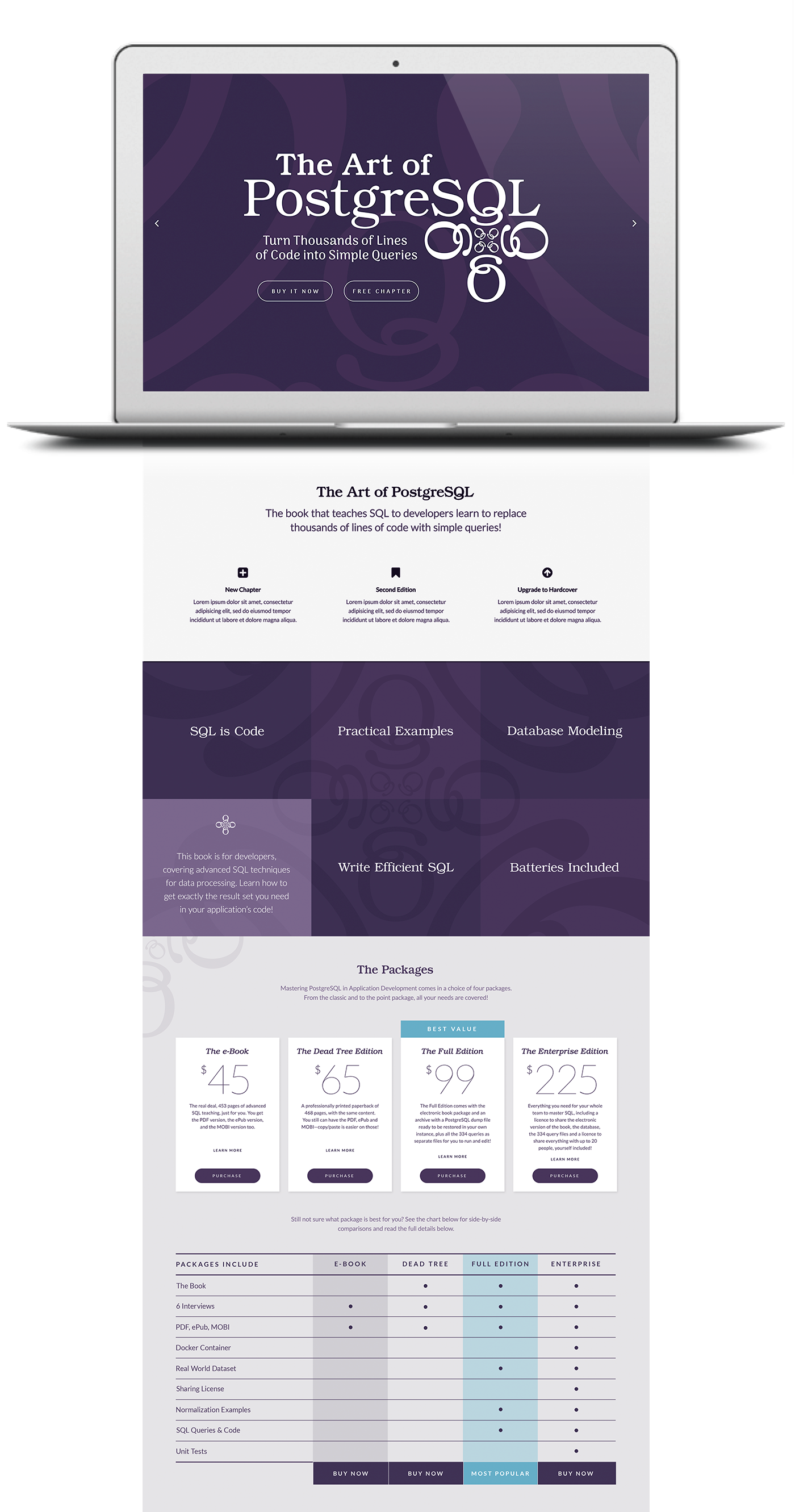
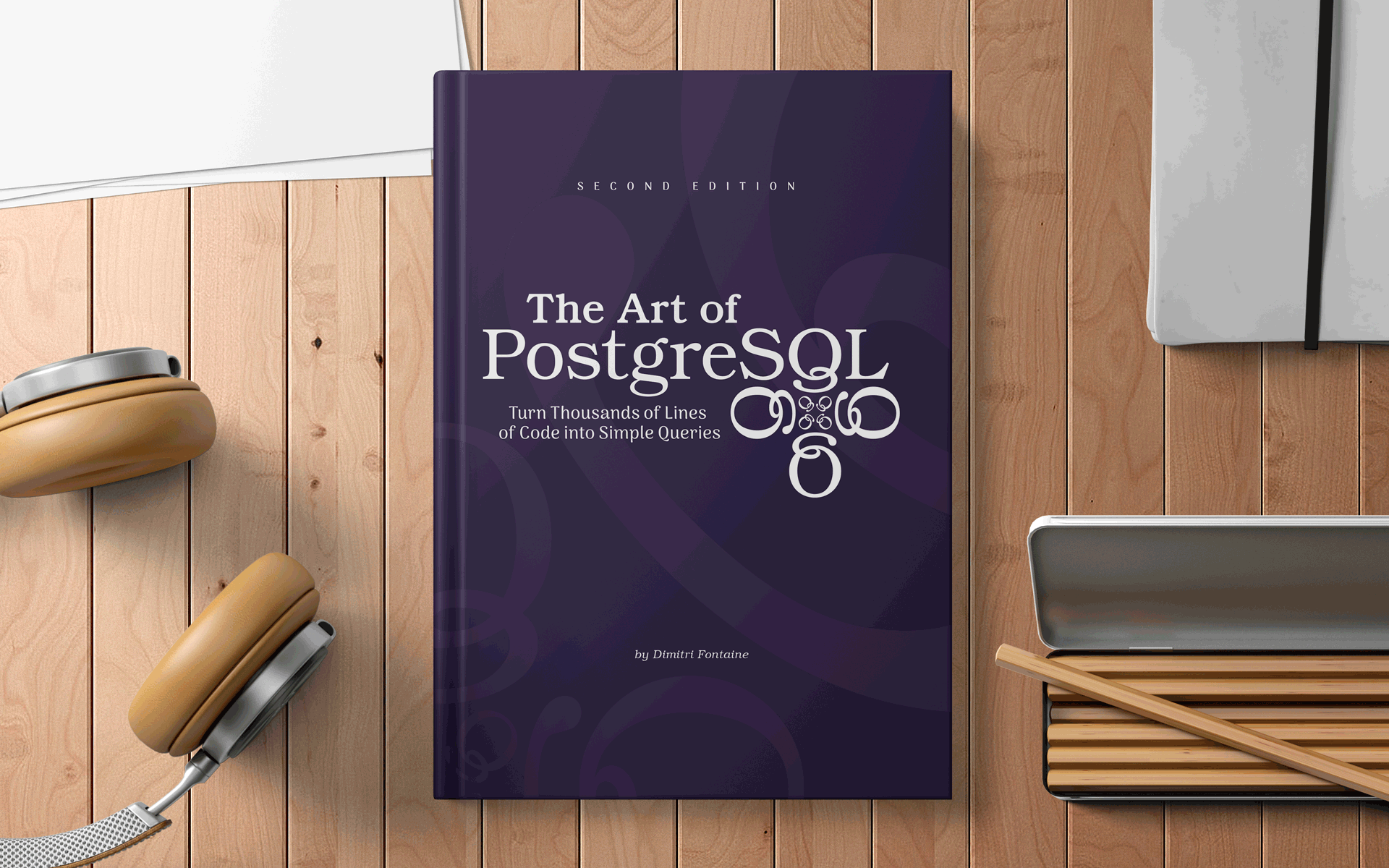
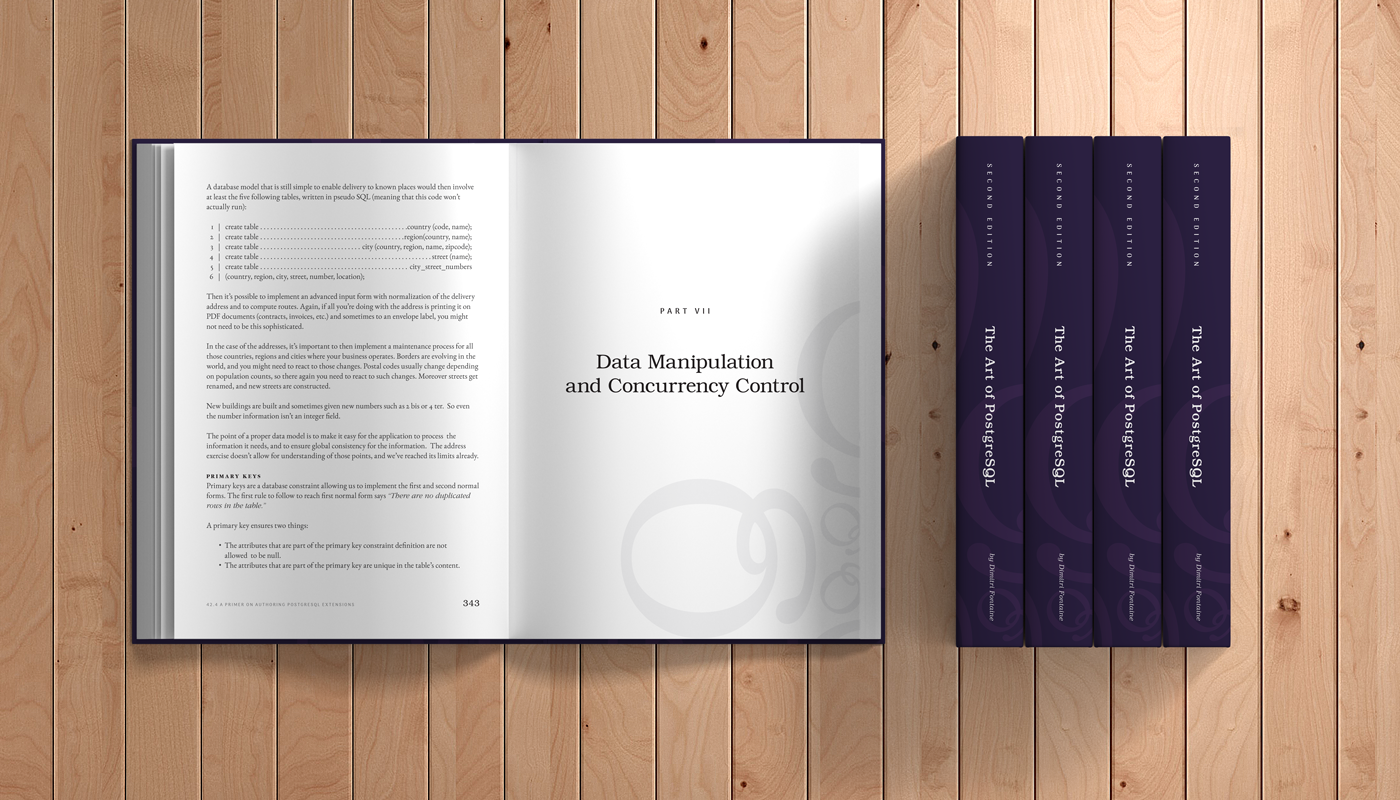
The book cover had to do something technical book covers almost never do: signal that the person who wrote it has a point of view, not just expertise. The deep purple, the custom logotype, the Adinkra symbol repurposed as a visual anchor—none of it looked like a database manual. That was the point. It looked like something worth owning.
The logo system had to work at every scale: spine, cover, website header, conference slide. We explored how far the mark could be abstracted before it stopped being recognizable, and where it needed to stay literal. The final system gave Dmitri a consistent visual identity that could travel with him, from the book on a desk to the keynote slide behind him to the browser tab on a developer’s second monitor.
The website brought it together. Tapoueh.org had been a beloved resource for years, but it belonged to a different era of the internet. The new site made the connection explicit: this is Dmitri Fontaine, this is what he believes about data, this is the book, and this is where to get it. The subscription community, the tutorials, the content platform—all of it now had a brand infrastructure to live inside.

The Results
The second edition launched to an audience that was already there. First-week sales exceeded $20,000. Email subscribers grew 19x, reaching an audience of more than 3,800—a self-sustaining community built around a brand, not just a book. “The Art of PostgreSQL” continue to be discovered and reviewed by developers years after launch, its influence growing organically as the PostgreSQL community itself grows.
What It Taught Me
Dmitri didn’t come to me with a hunch. He’d done his research and knew marketing mattered. He just didn’t know what kind of marketing problem he actually had. His book wasn’t selling the way it once had. Something felt disconnected. What he couldn’t see yet was that the problem wasn’t marketing volume—it was identity. He had the instinct that design could fix it, but he diagnosed the symptom, not the cause.
What made this project unusual was the absence of institutional support. There was no publisher, no marketing team, no existing brand playbook to work from or against. Everything we built had to earn its authority on its own, which meant the creative decisions carried more weight than they would in a larger organization. The rename wasn’t a recommendation we could test through committee. It was a risk we had to be right about.
The most valuable thing I brought to this project wasn’t a visual solution. It was the willingness to ask harder questions and reframe the brief before we started. Renaming the book meant walking away from whatever equity “Mastering PostgreSQL in Application Development” had built, but it was the right risk, because it gave us something worth designing around.
The brief you’re handed is rarely the brief that matters. Finding the real one is the work.
“The Art of PostgreSQL” is available for purchase here.